


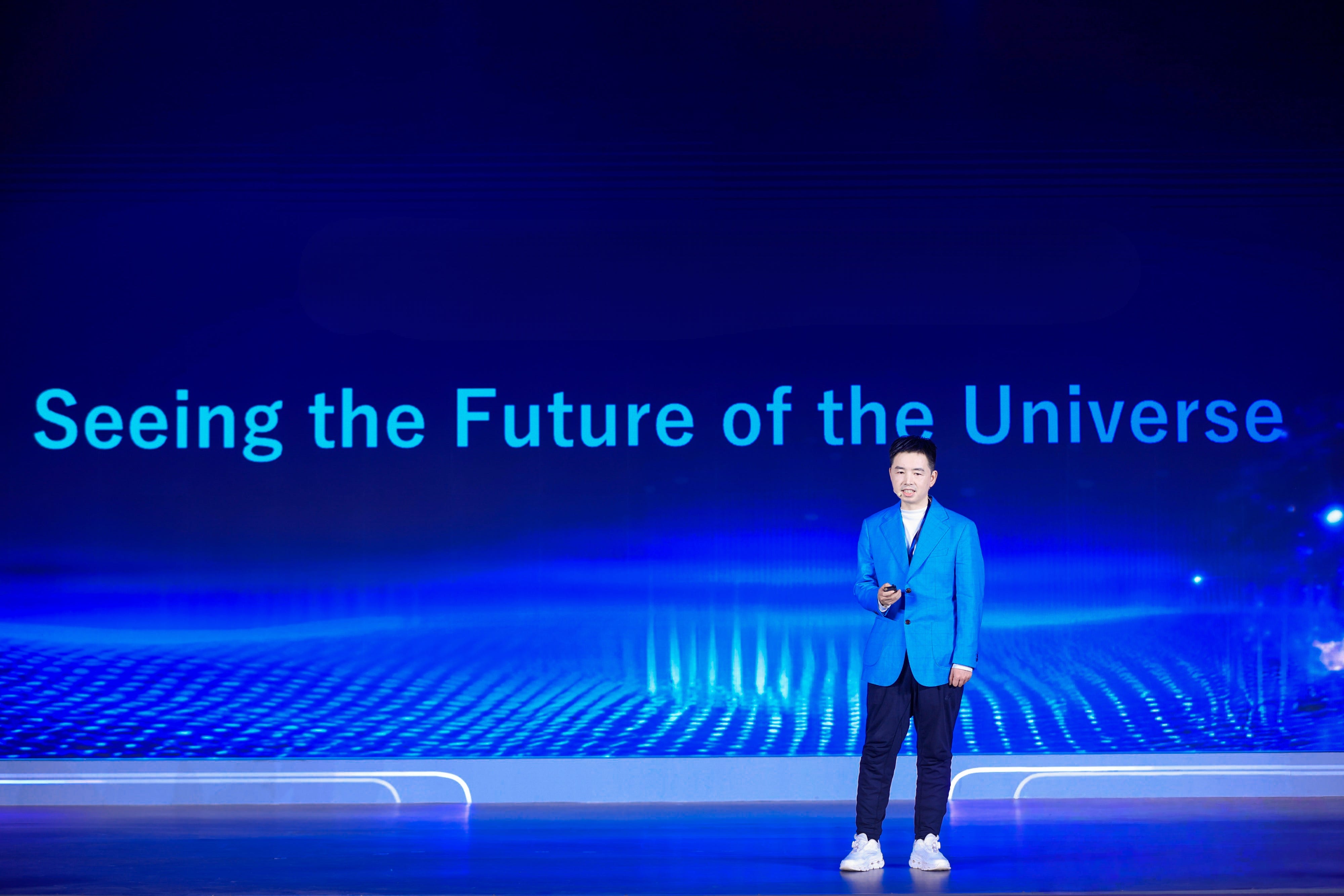
Zhou Yong (Alex Zhou) is the founder of Linkerbot (灵心巧手), a robotics company founded in 2023. The company develops the Linker Hand series, a line of high-degree-of-freedom dexterous robotic hands for research and industrial applications. According to company-disclosed figures cited in media, Linkerbot has surpassed 1,000 units in monthly shipments for its high-DOF dexterous hand products and accounts for more than 80% of the global high-DOF dexterous hand market. On an afternoon in March, Zhou Yong sat down with Pandaily founder Kevin Zhou at Linkerbot's Beijing office — surrounded by prototype hands lining the shelves — and talked about where robotics is headed, why the hand is the last great unsolved problem in the field, and what it will take to put a billion dexterous robots into the world.
There’s a demonstration that Zhou Yong likes to show people who have never thought seriously about robotic hands. He asks them to count how many things they touched in the first sixty seconds after waking up this morning. The alarm. The phone screen. A glass of water. A light switch. The toothbrush. Before most people have finished their morning routine, they’ve executed dozens of complex, multi-fingered grasps that no robot in history has been able to fully replicate.
“The hand,” Zhou told me, “is the last great hardware problem in robotics.”
Zhou Yong — known in English as Alex Zhou — is the founder and CTO of Linkerbot, a company that since 2023 has been building what it describes as some of the most dexterous commercial robotic hands on the market today. At a time when humanoid robots are everywhere in the news and every major tech company from Tesla to Figure AI is racing to build a walking, working machine, Linkerbot has been quietly solving the part of the problem that everyone else has mostly given up on: the hand.
The Problem With Robot Hands
To understand why this matters, it helps to understand what a “degree of freedom” actually means in the context of a robotic hand. Roughly speaking, each degree of freedom is an independent axis of motion — a way in which a joint can move. A human hand has approximately 27 of them. Most commercial robotic grippers have between 1 and 6. The gap between those two numbers is the gap between a robot that can pick up a box and a robot that can tie your shoes.
For decades, the gold standard for highly articulated robotic hands was the Shadow Hand, made by British company Shadow Robot. The Shadow Hand has 24 independently controlled joints and costs roughly between $140,000–$280,000 USD. It is extraordinarily capable and extraordinarily expensive. Tesla’s Optimus robot hand has 22. Both represent the upper ceiling of what global robotics companies have been able to commercialize at any price.
The company’s published and reported product lineup spans up to 42 degrees of freedom, while its more widely discussed commercial products include the L20, a 21-DOF dexterous hand publicly reported at roughly one-twentieth the cost of comparable overseas products.
And critically, Linkerbot is mass-producing them. While overseas competitors are still grappling with load capacity, battery life, and structural durability at the engineering scale, Linkerbot delivered over 10,000 units in 2025. Its products are in use at Cambridge University, Stanford University, Peking University, and Tsinghua University, among dozens of institutional customers.
“We are,” Zhou says with characteristic directness, “the only company in the world that can actually make these at scale.”
The Founder: From Three Hundred Million Users to Robotic Fingers
Zhou Yong’s path to robotic hands is not a straight line — which turns out to be one of his key advantages.
He graduated from the Youth Class at Huazhong University of Science and Technology at age 14, a selective program for academically exceptional teenagers that has produced a disproportionate share of China’s tech founders. He spent the next decade accumulating experience across two domains that almost never overlap: global online communities and embodied intelligence. The dual background gave him something rare in the hardware world — an obsessive focus on the end user alongside rigorous engineering thinking about what is actually achievable.
Before Linkerbot, Zhou’s previous company reached 300 million users — virtually none of them in China. “You can think of me as a Silicon Valley-style company,” he told me. “Less than 1% of my users were Chinese. Three hundred million users, all overseas.” This experience gave Zhou not just a global mindset — he genuinely thinks in terms of international markets from day one — but also a hard-won understanding of what it takes to build at scale for users who have no patience for friction.
“My way of thinking is no different from Silicon Valley,” he said. “I try to see things as they are.”
That perspective shapes how he talks about the global robotics race. Rather than framing the field purely as a national contest, he often returns to questions of manufacturing depth, data accumulation, and skill deployment.
The idea for Linkerbot crystallized around 2018–2019, when Zhou began watching the early stirrings of what would become the embodied intelligence wave. Humanoid robots were still largely academic curiosities, but he could see the trajectory. The fundamental bottleneck, in his reading, was not actuators or walking algorithms or even large language models. It was the hand. He founded Linkerbot in 2023 with a clear and, at the time, audacious mandate: build a dexterous hand that surpasses Shadow Hand in performance, and sell it at a fraction of the price.
From day one, Zhou refused to take the incremental path. “I told the team: our first mass-produced product has to have 20 degrees of freedom. Not 6, not 10. 20. If we’re going to do this, we do it right.”
The Technology: Three Roads, One Destination
What makes Linkerbot’s engineering approach genuinely distinctive is that it has not bet on a single mechanical architecture. Instead, the company has built capabilities across all three mainstream dexterous hand technologies — linkage transmission, tendon drive, and direct drive — a breadth that, according to company disclosures cited in the media, no other company currently matches.
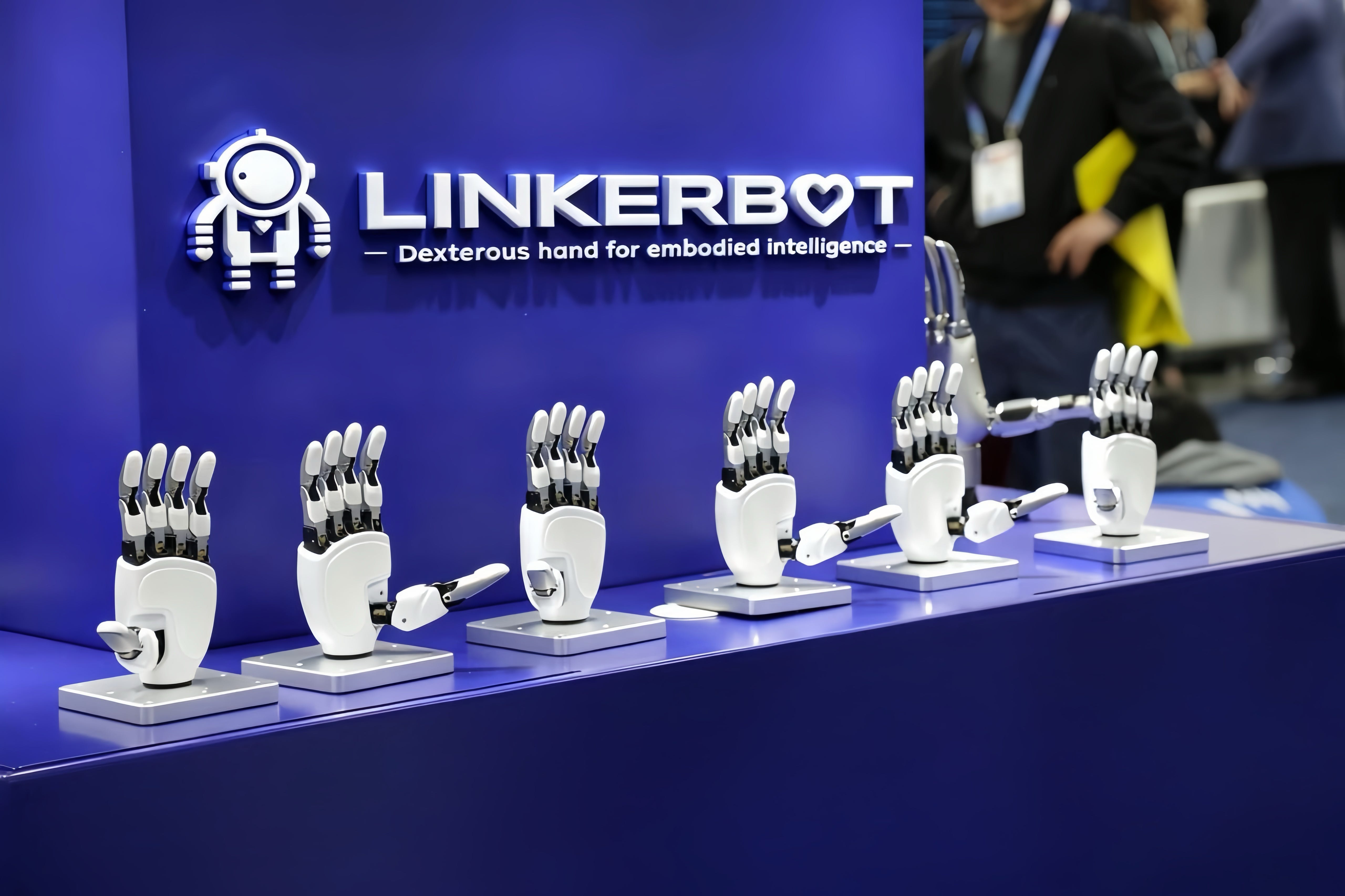
The first is linkage transmission, which uses rigid mechanical linkages between joints. This approach offers high rigidity, strong gripping force, and precise control. Each finger in a linkage-driven hand is an independent module that can be replaced or upgraded individually — a significant advantage for industrial deployment where maintenance downtime is costly. The Linker Hand O6, L6, L20 Lite, and L20 all use this architecture.
The second is tendon drive, which mimics the way human tendons pull on finger bones to create motion. This architecture allows for smoother, more naturalistic movement and is inherently more compact — the reason Shadow Hand, Tesla’s Optimus, and Boston Dynamics’ Atlas all use variants of it. The Linker Hand L30 uses this approach, achieving ±0.20mm repeat positioning accuracy, a maximum movement speed of 440°/second, and a peak fingertip force of 3.5N per finger with a maximum thumb force of 4N — all from a hand weighing just 1.4kg.
The third is direct drive, which emphasizes transmission efficiency, control precision, and fast dynamic response by reducing intermediate mechanical complexity. It is particularly valuable in scenarios that demand high responsiveness, precision, and consistency under repeated operation. Linkerbot’s product portfolio also includes hands built on this architecture.
“We didn’t choose,” Zhou explains. “Different applications need different trade-offs. Industrial scenarios may prioritize rigidity and load capacity. Research and biomimetic tasks may value compactness and natural motion. Other scenarios demand high precision and responsiveness. So we built across all three.”
The current Linker Hand product lineup spans five models:
O6– 11 joints, only 370g, <±0.22mm repeated positioning accuracy, 50kg maximum load.
L6 — 11 joints, 623.5g, ±0.20mm repeat positioning accuracy, 0.35-second opening/closing response. Designed for precision assembly and irregular object grasping.
L20 Lite — 20 joints, 800g, piezoresistive sensors standard. Designed for education, research, piano performance, household assistance, and elderly care.
L20 — 21 joints (16 Active + 5 Passive DOF), 1.1kg, 18N maximum thumb force. Designed for industrial automation, household assistance, and complex multi-task environments.
L30 — 25 joints (22 Active + 3 Passive DOF), tendon drive, 1.4kg, CAN FD protocol (up to 5Mbps). Designed for precision industrial tasks and medical assistance & healthcare applications.
The Sensory Layer: Teaching Machines to Feel
One of Zhou’s most emphatic points — one he returns to repeatedly — is that degrees of freedom alone don’t make a useful dexterous hand. What matters equally is what the hand can perceive and learn.
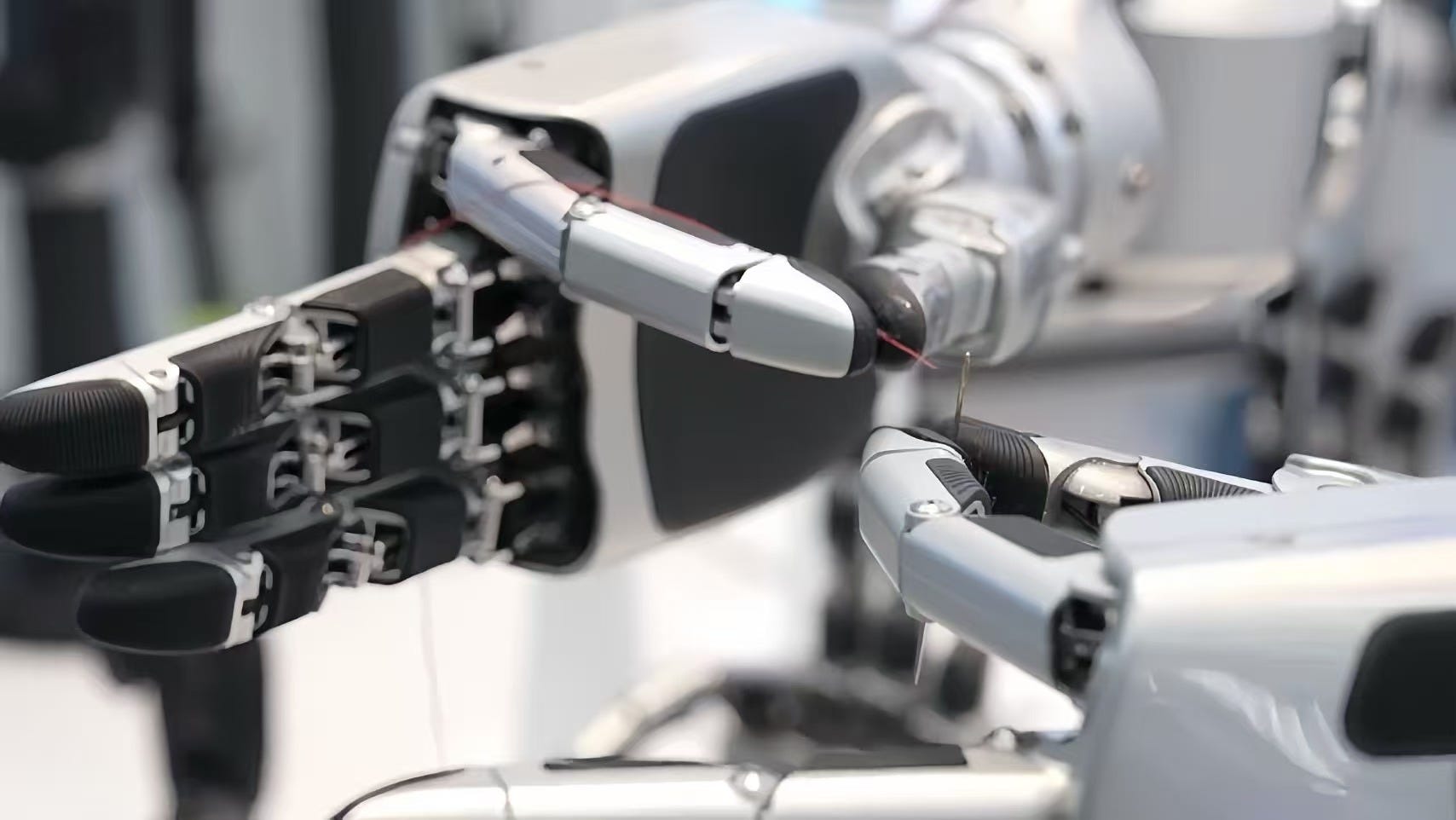
Linkerbot has also integrated a range of advanced sensors into its hands. Pressure sensors allow the system to detect and regulate gripping force with precision, reducing the risk of damaging delicate objects. Tactile sensors, designed to approximate the sensing function of human skin, help the hand perceive surface texture and shape, while the broader sensing system provides real-time feedback on force, form, and temperature. When handling fragile items, the hand can automatically adjust its grip. A high-precision sensor array enables millimeter-level sensing accuracy, and sensor-fusion technology brings these different streams of information together to form a more complete picture of the environment.
That is why Linkerbot frames its strategy not simply around the hand itself, but around what it calls “dexterous hands + a cloud brain.” In practice, this means the company is building not only the hardware, but also the data-collection and model-training system behind it. As the hand interacts with the physical world, it generates the manipulation data that can be used to improve how the system learns and performs.
At the center of this approach is LinkerSkillNet, which the company describes as a large-scale dexterous manipulation dataset built through extensive real-world and simulated learning. On top of that foundation, Linkerbot trains what it calls its cloud brain — with the goal of helping Linker Hand learn new actions faster, execute tasks more accurately, and adapt more efficiently to new scenarios.
The logic is simple, but powerful: the more tasks the system learns, the better it becomes at learning the next one. Linkerbot also says this cloud-based intelligence layer can be adapted across different robotic platforms, giving the system greater flexibility as its range of applications expands.
The Production Bet: Using Robot Hands to Build Robot Hands
There is a detail about Linkerbot’s manufacturing roadmap that Zhou shared in our conversation that hasn’t been widely reported, and it may be the most consequential thing about the company’s medium-term competitive position.
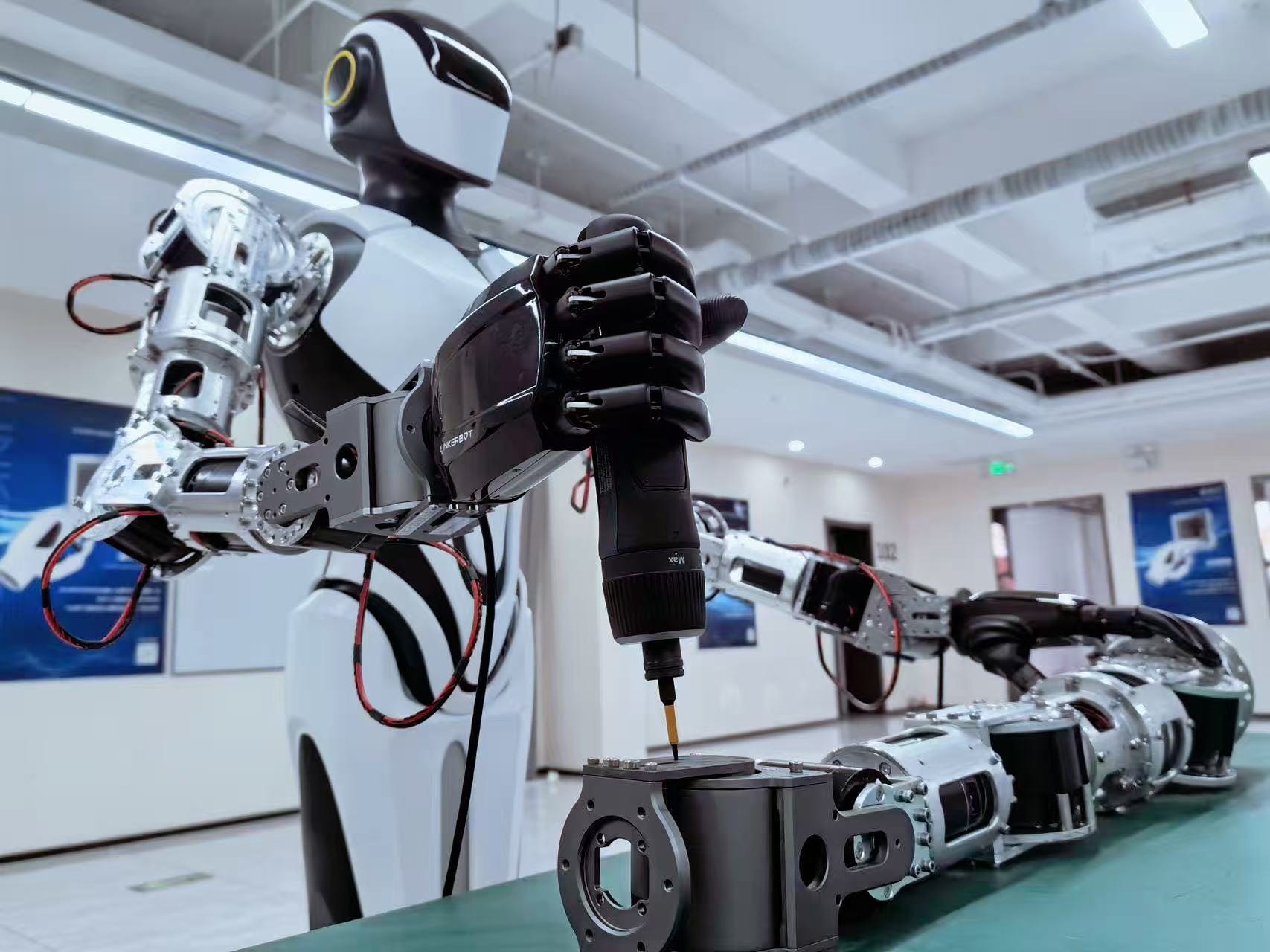
Linkerbot is currently producing more than 1,000 High-DOF dexterous hands per month. Within the near term, Zhou expects to scale that to 4,000 to 5,000 units per month. And the plan for how to get there is elegantly recursive: he intends to build an automated production line that uses robotic hands to assemble robotic hands.
“Once that production line is operational,” Zhou told me, “the barrier to entry becomes extremely high. Think of it this way: one production line is equivalent to a cluster of 1,000 robots working in parallel. Right now, there are almost no companies in the world that can operate a cluster of 1,000 robots. We’ll be building that capability into our manufacturing infrastructure.”
The Market Bet: 1 Million Hands, 2 Billion Robots
Zhou has a theory about how the embodied intelligence revolution will actually unfold, built around a specific number: one million.
“The key question is not when we’ll have better AI models,” he explains. “The key question is where the training data for embodied AI comes from. You can’t synthesize your way to a robot that can work in the real world. You need real-world data from real robot hands doing real tasks.”
His bet is that the deployment of one million dexterous-hand-equipped robots into real environments — homes, factories, hospitals — will generate more manipulation training data in a single day than was collected globally for all of 2025. That data, fed into cloud-based learning systems, will produce the generalization capability that current embodied AI lacks.
Once the generalization problem in robotic manipulation is solved, Zhou predicts that the humanoid robot market will scale from current levels to more than 100 million units, and within three to five years after that, to 2 billion. He delivers this not as aspiration but as engineering calculation.
The Cultural Dimension: Skills as Civilization
There’s a dimension to Zhou’s thinking about dexterous hands that you don’t hear from most robotics founders, and it reveals something important about how he frames the mission internally.
He talks about hands not just as mechanical end effectors, but as carriers of human skill. When Elon Musk talks about Optimus, he has pointed to piano playing as a benchmark for dexterous manipulation. Zhou’s frame is broader: a truly capable hand, in his view, should not be limited to a single benchmark task, but should be able to learn across a much wider repertoire — from instruments and tools to crafts and everyday forms of embodied knowledge.
That idea is not merely cultural. It is also technical. Different industries, traditions, and working environments contain different kinds of fine-motor tasks, and those tasks can become valuable training data for embodied intelligence. A company operating close to dense manufacturing systems and diverse real-world workflows may therefore gain access to a wider range of manipulation scenarios.
This is the other side of the generalization argument: not just more data, but richer data — drawn from more tasks, more contexts, and more forms of human practice. “The hand is the mapping of skill data,” Zhou told me. “And the dexterous hand is the projection of civilization. We have five thousand years of craft traditions to draw on. That’s our biggest advantage.”
The Road Ahead: Industrial Pivot and the Global Market
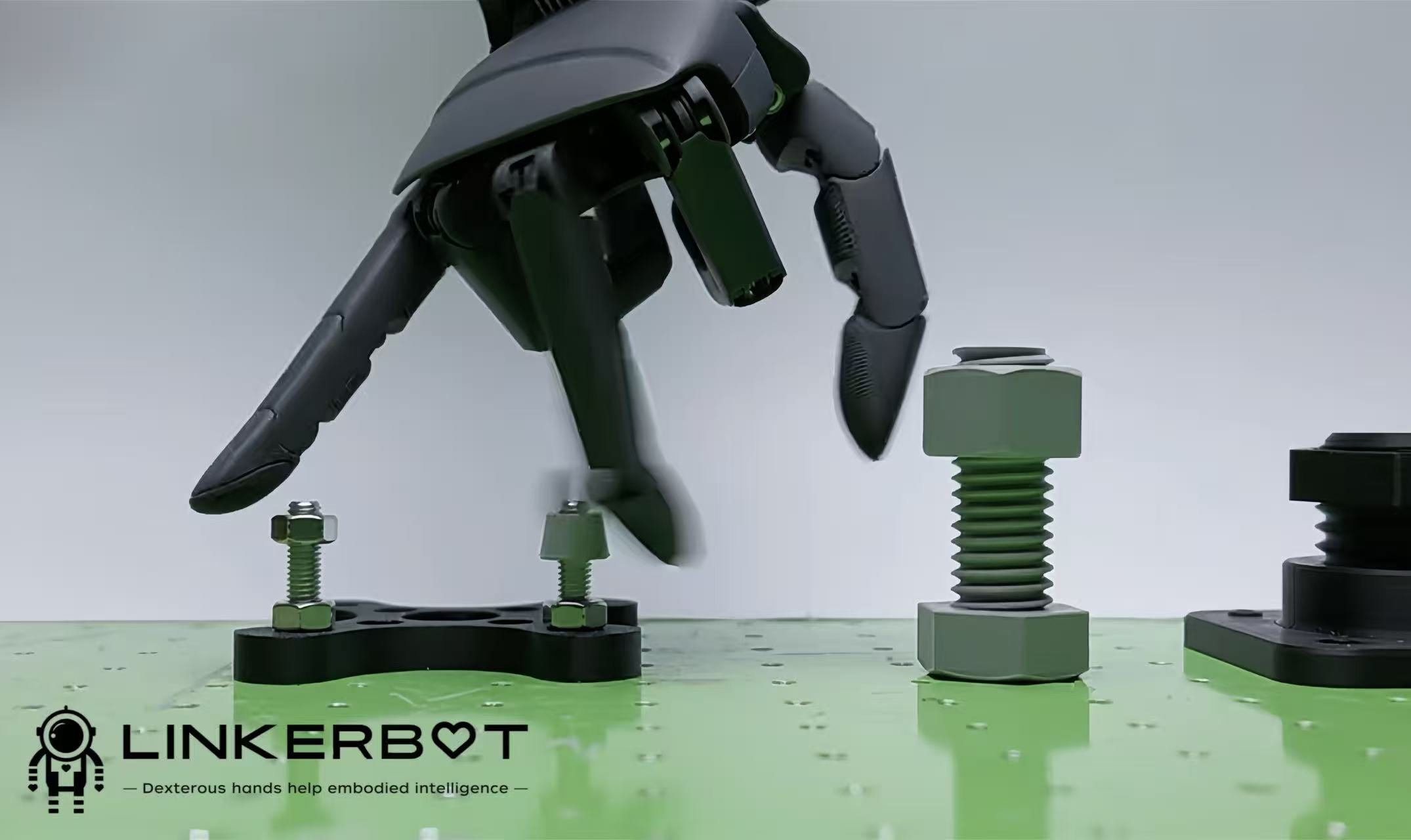
In 2025, Linkerbot made a decisive pivot toward industrial applications. The company launched its “Industrial Master” series — the L6 Industrial and L20 Industrial — specifically designed for semi-structured factory environments. Both use a newly developed “ultra-strong electric cylinder” drive module that achieves 90% drive efficiency — more than double the traditional benchmark — and integrates drive and control functions within the space of a human palm.
The pivot to industry is not a retreat from the original vision. It’s a recognition that factories are where humanoid robots will actually deploy first, where the data collection can begin at scale, and where the business model is clearest. Semi-structured environments with repetitive precision tasks are the ideal first proving ground for highly articulated dexterous hands.
On the pricing front, the L20 is positioned as an option for customers seeking both high dexterity and strong cost-performance. The O6 is aimed more squarely at accessibility — designed with the goal of making dexterous hands affordable to students and embodied AI researchers alike. Zhou’s strategy reflects a broader logic: the faster dexterous hands proliferate, the faster data accumulates, and the faster embodied systems improve.
Linkerbot currently has offices in Silicon Valley and Canada in addition to its Beijing headquarters. Zhou recognizes that international brand awareness is still a work in progress. “We have a presence,” he said, “but our brand recognition overseas still needs work.”
Why Linkerbot Matters
It would be easy to read Linkerbot’s story as a simple cost story — a company making dexterous hands more affordable than legacy systems. But that reading misses the larger point.
For decades, highly articulated robotic hands have remained largely confined to the ivory tower of robotics. The Shadow Hand, developed in the 1990s, became one of the best-known benchmarks in the field: technically impressive, but also expensive and difficult to scale far beyond research and demonstration settings. The gap between high-end performance and broad commercial viability is precisely the gap Linkerbot is trying to close.
The broader significance lies in where this fits within embodied AI. Many robotics companies— Figure AI, 1X Technologies, Apptronik, Boston Dynamics, Tesla — are all working on the full-stack humanoid, but dexterous manipulation remains one of the hardest problems in the field. A capable hand is not just another component. It is the interface through which a robot performs useful work, collects data, and turns intelligence into action in the physical world.
“The world doesn’t need another simple gripper company,” Zhou said. “The world needs a company that redefines what a hand can be.”
Whether or not his 2-billion-robot prediction is right, the market data is already pointing somewhere interesting. Linkerbot’s 80% global market share in High DoF dexterous hands, achieved not through exclusion but through genuine performance advantage at commercial price points, is the kind of number that tends to create durable competitive positions. More importantly, Linkerbot has done so by positioning dexterous hands not as niche research hardware, but as products increasingly aimed at real deployment and broader adoption. If embodied AI is to move from demonstration to real-world use, that shift may matter more than many people yet realize.
Linkerbot is headquartered in Beijing, with offices in Silicon Valley and Canada. The Linker Hand series is available globally. Its products are used by leading universities, including the University of Cambridge and Stanford University, and have also attracted interest from major industrial customers such as Siemens and Samsung.
This article is the first in Pandaily's "Interview with 100 Founders: China's Next Wave" series.
Agree. The hand is not just a component, it is the interface between skill, data, and deployment, which is why manufacturing depth matters so much. We mapped a similar hardware bottleneck stack here: https://evidenceengineering.substack.com/p/humanoid-robots-in-2026-chips-are?utm_campaign=post-expanded-share&utm_medium=post%20viewer